From registering a car to selling or scrapping one in Sydney, everything starts with the VIN or the unique identification number that tells a vehicle’s true story. Often called the DNA of your car, the VIN check are essential for ownership checks, insurance, and registration, yet many drivers don’t fully understand its importance.
In this guide, we explain what a VIN is, where to find it, how to check it correctly, and why a VIN Check plays a key role when buying, selling, or scrapping a car in NSW.
What is a VIN number in NSW?
A VIN (Vehicle Identification Number) is a 17 digit unique character code that is given to every vehicle after its manufacturing. No two vehicles can share the same VIN. You can find it on the dashboard or car’s door jamb. It is like the vehicle’s fingerprints, it has details like the vehicle’s manufacturer, model, year, unique serial number and production facility etc. It is needed for registration, transfer, and inspection of vehicles in NSW.
VIN check NSW helps government systems and official databases to track and identify your vehicle’s throughout its lifespan which makes sure that the vehicle has proper registration and safety compliance.
Note: When searching for “VIN check NSW” it shows “Check a vehicle registration”, the reason is because many people commonly use VIN to check a vehicle’s registration.
You can do a free VIN check online via the Service NSW website.
VIN vs Number Plate
A number plate can change, but a VIN never changes. That’s why government authorities rely on VINs, not plates, for official records and NSW vin check systems.
Note: If you wish to read more information consider checking this Vehicle Identification Number.
Structure of VIN: How can you decode it
A VIN is structured into 17 characters, with each section providing specific information about the vehicle. Understanding how a VIN is organised makes it easier to perform the VIN Check and confirm if a vehicle’s details match official records.
VIN Structure: How to Decode a VIN
The table below explains what each section of a VIN represents.
| VIN Digit(s) | Description | Details |
| First 3 characters | Origin & Manufacturer | Identifies the country where the vehicle was made and by which company. |
| Next 5 characters (4–8) | Vehicle Description | This provides general information about the vehicle’s model, body type, engine type, and production line. |
| 9th character | Security Check Digit | Used to verify that the VIN is valid and authorised by the manufacturer. |
| 10th character | Model Year | Indicates the year the vehicle’s model was manufactured. |
| 11th character | Production Plant | Shows which factory or assembly plant built the vehicle. |
| Last 6 characters (12–17) | Unique Serial Number | Uniquely identifies the vehicle, making it different from every other car produced. |
Note: This is the standard VIN structure used internationally for all modern vehicles.
For more in-depth VIN structure information visit the Vehicle Identification Numbers
Sample VIN (for illustration only)
Below is a sample VIN used only as an e00xample to explain how VIN numbers are structured. Every real vehicle will have a unique VIN.
1HGCM82633A123456
Note: This is a sample VIN used only to explain VIN structure. It is not linked to any real vehicle.
Breakdown of the sample VIN
Using the sample VIN 1HGCM82633A123456, here’s how each section works:
| VIN section | Characters | Meaning | Example from the sample VIN |
| World Manufacturer Identifier (WMI) | 1-3 | Country & manufacturer | 1HG (USA, Honda) |
| Vehicle Description Section | 4-8 | Model, body type, engine | CM826 |
| Security Check Digit | 9 | Security & authenticity check | 3 |
| Model Year | 10 | Year of manufacture | 3 (2003 in this example) |
| Production Plant | 11 | Manufacturing Plant | A |
| Unique Serial Number | 12-17 | Unique vehicle identifier | 123456 |
Important Notes for you to Remember:-
- VINs are always 17 characters
- Letters I, O, and Q are never used to avoid confusion with numbers 1 and 0
- The security check digit (9th character) is used by authorities to detect fake or altered VINs
- The last six characters uniquely identify the vehicle
Where do I find my VIN?
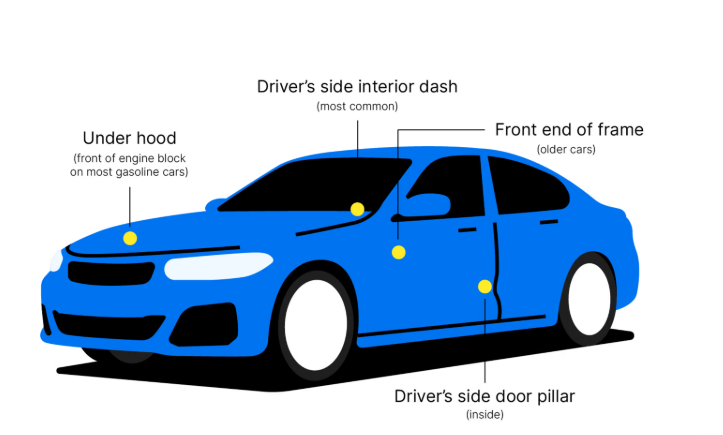
The location of the VIN placement on vehicles can vary depending on the car’s make and model.
You can usually find the VIN in several places:-
- On the dashboard near the windscreen (driver’s side)
- Inside the driver’s door jamb
- Under the bonnet
- At the bottom of the windshield
- Front end of frame
- Next to spare wheel
When doing a NSW VIN number check, always make sure the VIN matches across all locations. Any mismatch may indicate tampering or illegal rebirthing.
If you can’t find the VIN on the vehicle itself, you can also check your:
- Vehicle registration papers or Service NSW online registration records
- Proof of ownership or purchase documents
- Insurance policy documents
How to do a VIN check in NSW?
In NSW, “checking a VIN” usually means running two checks: a PPSR vehicle history report to check for outstanding finance, and a Service NSW vehicle history report to check registration, write-off and ownership history.
Ordering a VIN check (PPSR vehicle history report) is the safest way to find out if a car has outstanding finance or a write-off history in NSW.
The two ways to check VIN in NSW
1. PPSR VIN Check (Official Finance & Write-off Check)
This is the most important one.
- Cost: Online cost is $2, whereas if you contact the center the cost will be $7.
- Shows:
- Outstanding finance
- Write-off status
- Stolen status
- Does not show owner names or service history
This is the only way to check if money is still owed on the car.
Note: Check here for latest updates regarding the PPSR fees.
2. Service NSW Vehicle History Report (Registration History Check)
This is the “history” side of a VIN check.
- Cost: Paid
- Shows:
- Write-off history
- Stolen status
- Number of previous owners
- Past use (taxi, hire car, etc.)
- Odometer history
- Does not show outstanding finance
Step by Step process to do a PPSR VIN Check (Finance & Write-off Check)
Purpose: Check outstanding finance, write-off and stolen status.
Step 1: Find the VIN (17-digit number)
- On the windscreen, registration papers, engine bay or door pillar
Step 2: Go to the Australian Government PPSR website and search “PPSR vehicle check Australia”
Step 3: Click Search the PPSR → Motor vehicle search
Step 4: Enter the 17 character VIN.
Step 5: Pay the $2 fee
Step 6: Download your PPSR Vehicle History Report
Step by Step process to perform a Service NSW Vehicle History Report (Registration History Check)
Purpose: Check registration history, ownership count, odometer history, write-offs and stolen status.
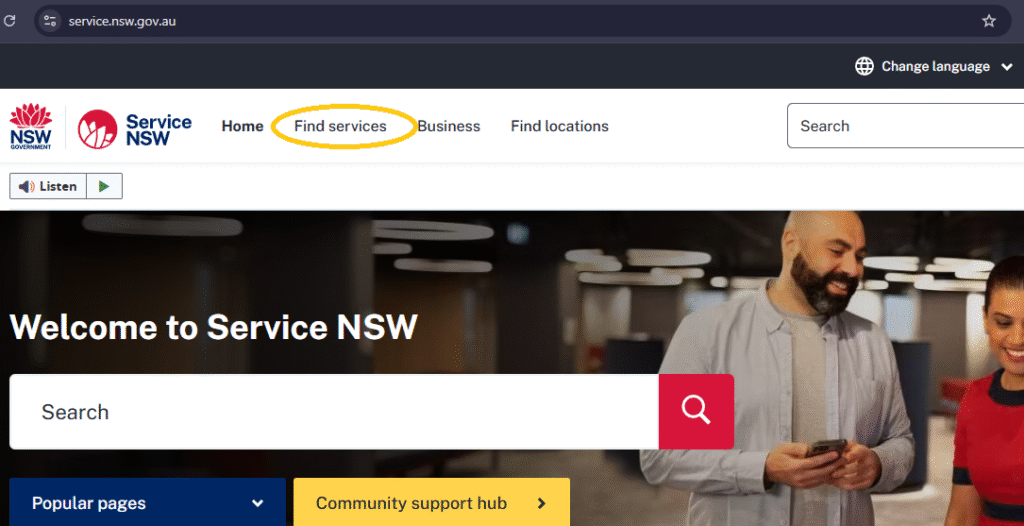
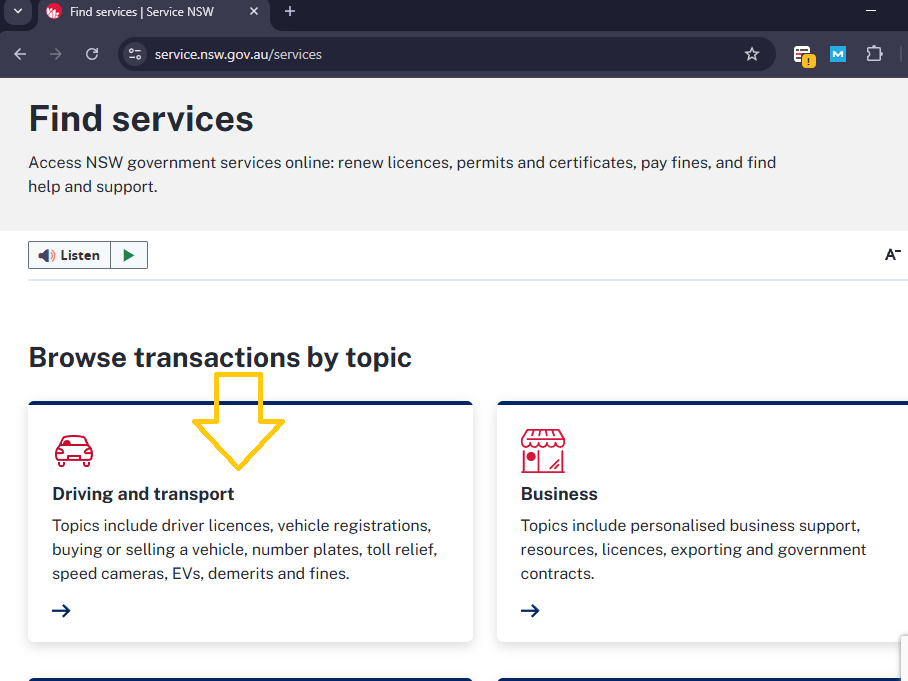
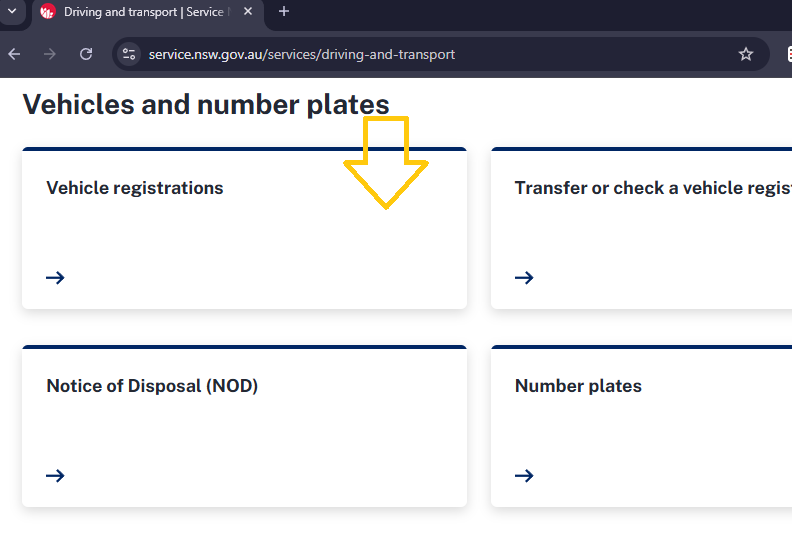
- Go to the Service NSW website, then Find Services → Driving and transport → Vehicle registrations and click on Order a vehicle history report Service NSW.
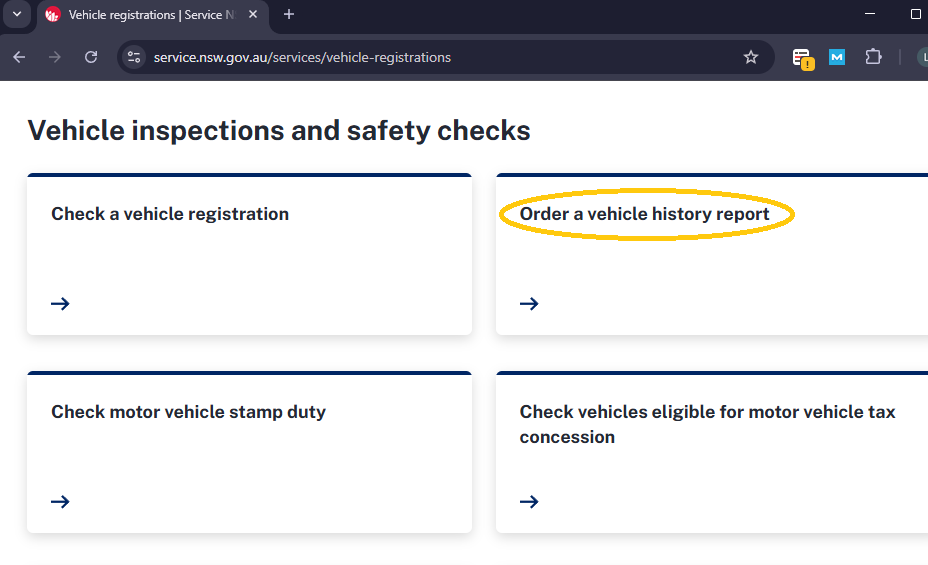
- Scroll down to the bottom and click on the Order online button.
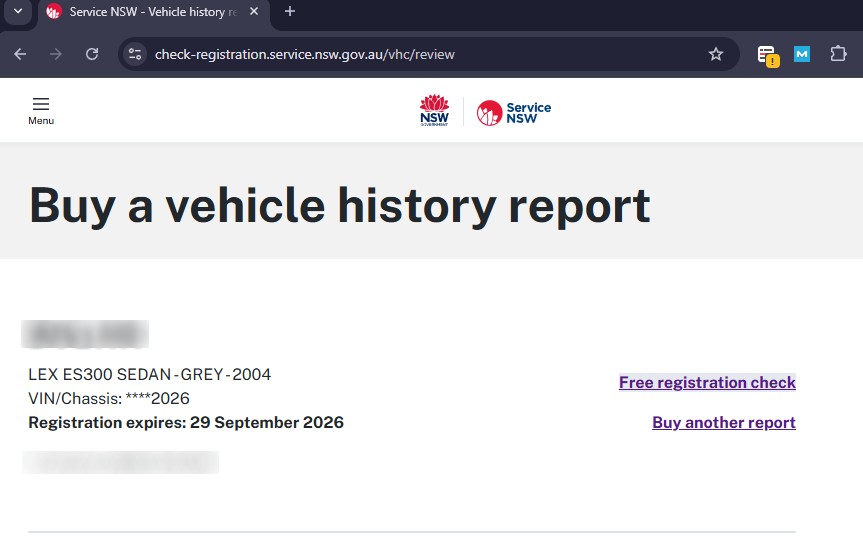
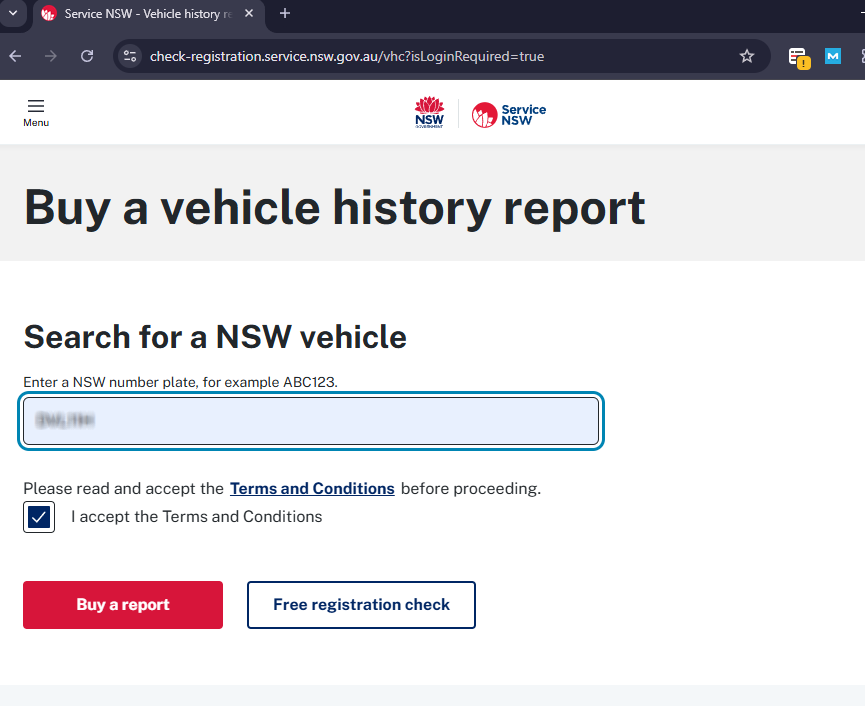
- Now enter your vehicle number plate or VIN number.
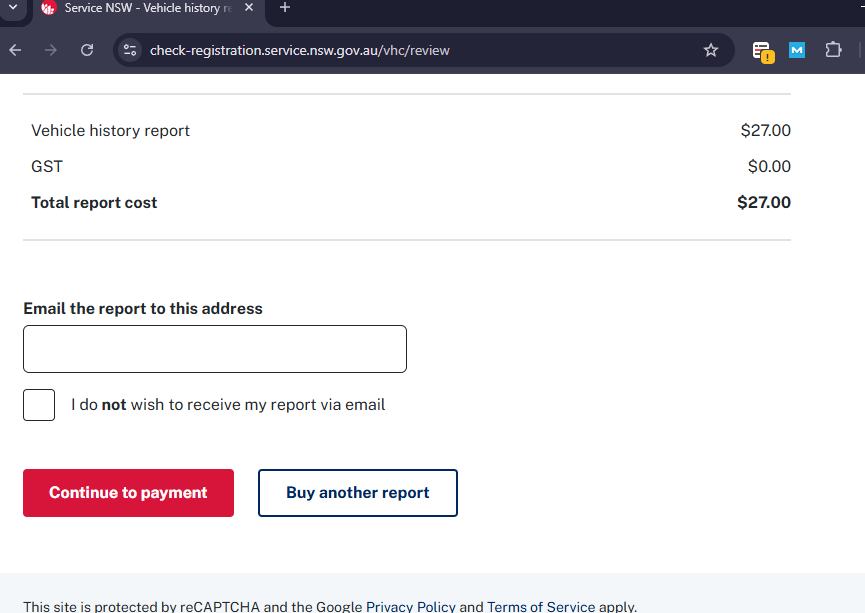
- Pay the Service NSW fee (shown before checkout)
- Download the Vehicle History Report
Best Practice
- Always run the $2 PPSR search first, that’s the only official way to check for money owed on a vehicle.
- If you also want registration/use history, then order the Service NSW vehicle history report separately.
Why is a VIN check important?
A VIN (Vehicle Identification Number) is a unique code given to every vehicle when it is manufactured. It is often considered as a car’s DNA and plays a crucial role in identifying, registering, and tracking a vehicle throughout its lifespan.
Here’s why the VIN is so important:
1. Vehicle Identification
The VIN number check serves as a unique identifier code for your vehicle, it differentiates it from every other car.
2. Registration and Insurance
In NSW, a VIN check is required to:
- Register a vehicle
- Transfer ownership
- Obtain or update insurance
It makes sure that all official records, insurance policies, and registration details are correctly linked to the right vehicle.
3. Safety Recalls
Manufacturers use VIN checks to identify vehicles affected by safety recalls. By checking your VIN, you can find out whether your car has been flagged for a recall or not.
4. Vehicle History Checks
When buying or selling a vehicle, the VIN check acts as a reliable history checking tool. It allows you to:
- Confirm if the vehicle is not stolen
- Check if it has been written off
- See if there is any outstanding finance
- Access official vehicle history reports through Service NSW or PPSR
Common mistakes to avoid during a VIN check
- Do not rely on just free tools
- Ignoring VIN mismatches
- Buying or selling a vehicle without confirming VIN history
- Fake “VIN check” websites and overcharging for basic decode
- Scam history reports pushed by dodgy sites
- Always use official PPSR & NSW Govt sources
Conclusion
In conclusion, a VIN check allows you to know all the details about the vehicle’s make, model, history with its manufacturing origins. It doesn’t matter if you’re buying a used car or just checking for safety recalls, VIN plays an important part in this process. In this guide, we have covered all that you need to know about VIN number check.
If you want to sell your old and used car hassle free, choose Scraply, we buy all types of vehicles in any condition offering quick cash for cars Sydney wide.
Note: This blog is written with all the latest updates made by the NSW Transport Government in 2026, ensuring you receive the most accurate and up-to-date information.
FAQs
Q1. Can I do a VIN Check NSW free?
Ans. Yes, basic info is free. Official history checks may require a small fee.
Q2. Is a VIN Check required to scrap a car?
Ans. Yes, licensed scrap companies ask for VIN to confirm ownership.
Q3. Does a VIN Check show accident history?
Ans. It shows write-off status, but not minor accidents.
Q4. Is VIN the same as a number plate?
Ans. No. VIN is permanent; plates can change.